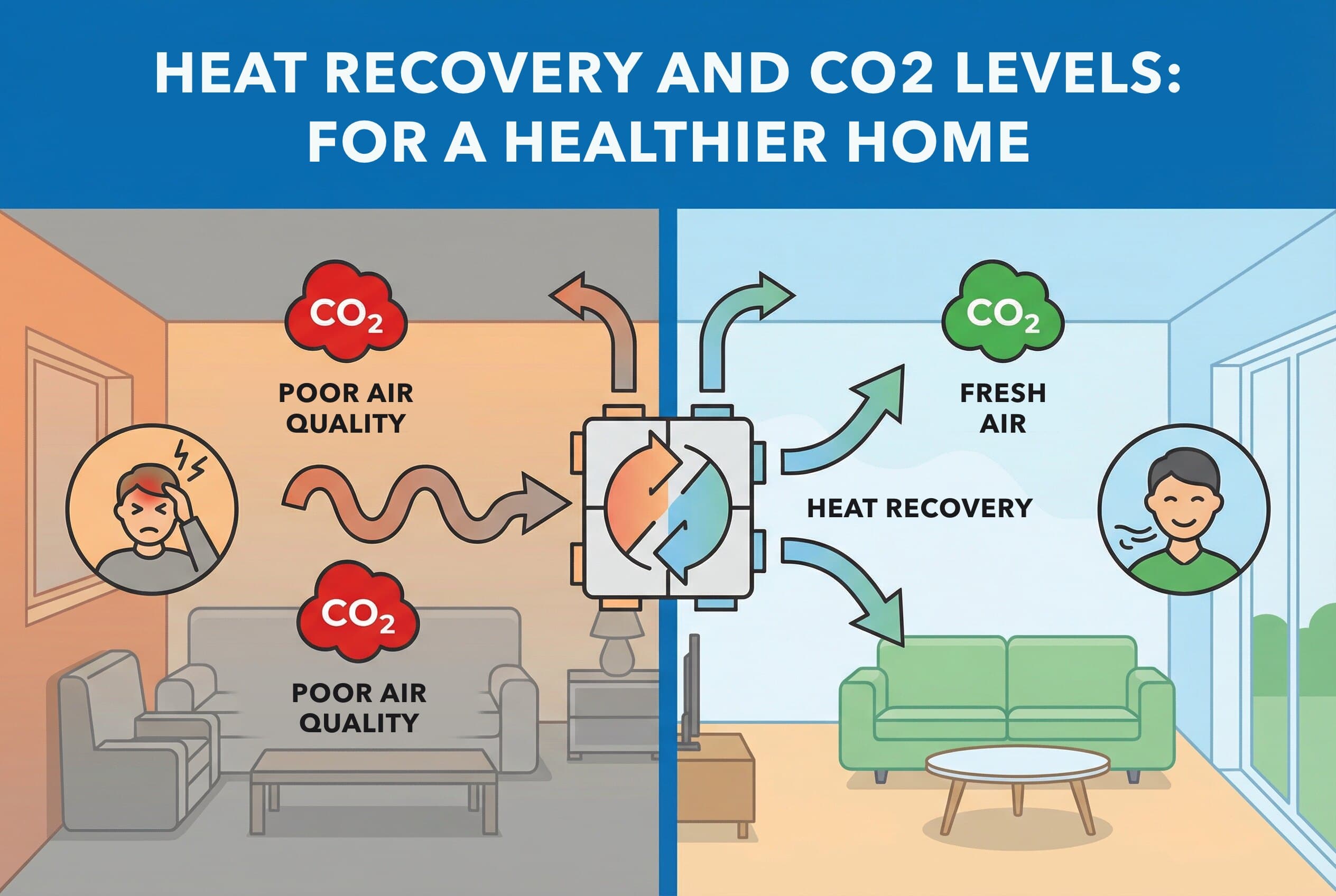
Indoor air quality in bedrooms is crucial for healthy sleep and overall well-being. Carbon dioxide (CO₂) levels serve as a key indicator of ventilation efficiency, with concentrations above 1,000 ppm signaling inadequate air exchange. This article analyses real data from three different approaches to bedroom ventilation, where typically two people sleep, using CO₂ measurements from the ioSWIPE+ smart wall switch unit with integrated sensor mounted at 120 cm height.
Scenario 1: No mechanical ventilation
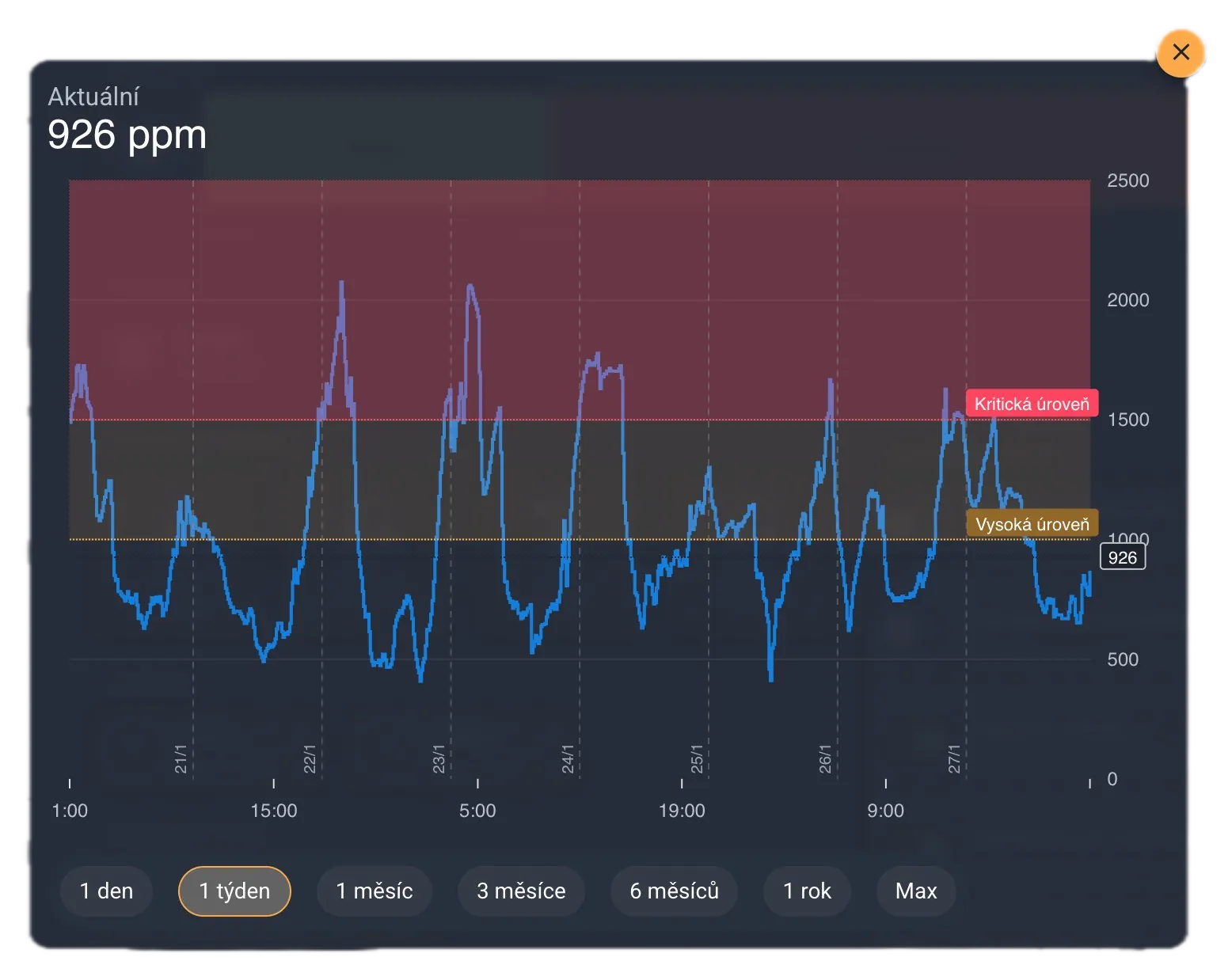
Above 1,000 ppm: just under half the week
In a house equipped with the BARAQ smart home system but without any mechanical ventilation or heat recovery, CO₂ levels show significant variability throughout the day.
- Peak values: Twice briefly above 2,000 ppm in the measured period, otherwise at most 1,800 ppm
- Critical level: 1,500 ppm (frequently exceeded)
- Average value: ~1,000 ppm (at the recommended threshold)
This scenario demonstrates complete reliance on natural ventilation through window opening. During sleep, when windows are usually closed, CO₂ builds up quickly and often rises above 1,500 ppm. That is already very stale air.
Scenario 2: Smart heat recovery with whole-house averaging
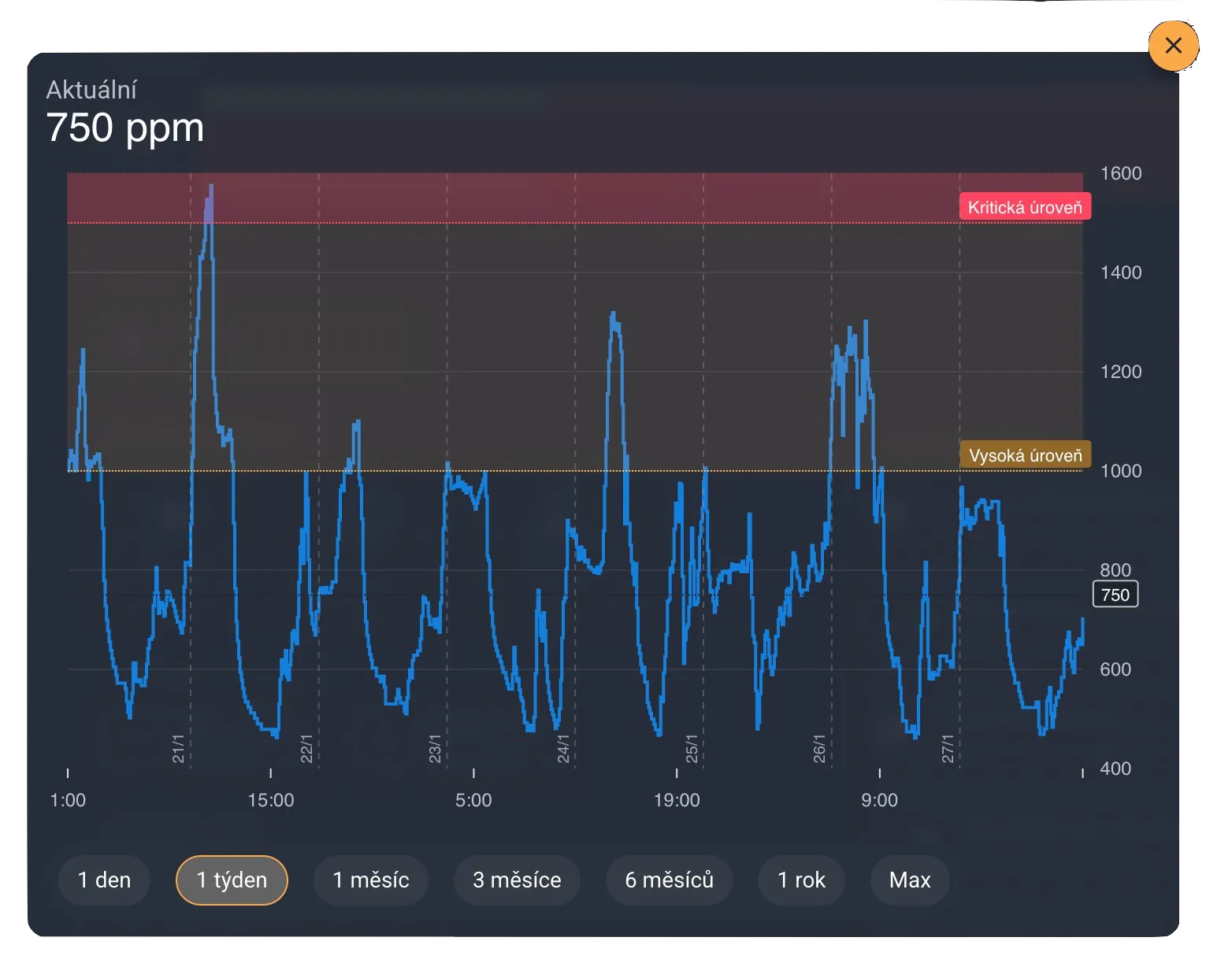
Above 1,000 ppm: about 15% of the week, peak ~1,600 ppm
This house features an advanced heat recovery system with integrated CO₂ and humidity sensors along with the BARAQ smart home system. However, the smart ventilation rule is disabled and the system operates based on whole-house value averaging.
- Peak values: Up to 1,600 ppm at maximum occupancy
- Critical level: 1,500 ppm (occasionally exceeded)
- Typical range: 600–1,000 ppm for most of the day
While this system represents significant improvement, it suffers from a fundamental limitation: the heat recovery unit responds to average conditions throughout the house rather than addressing specific room needs.
Scenario 3: Basic heat recovery with smart control
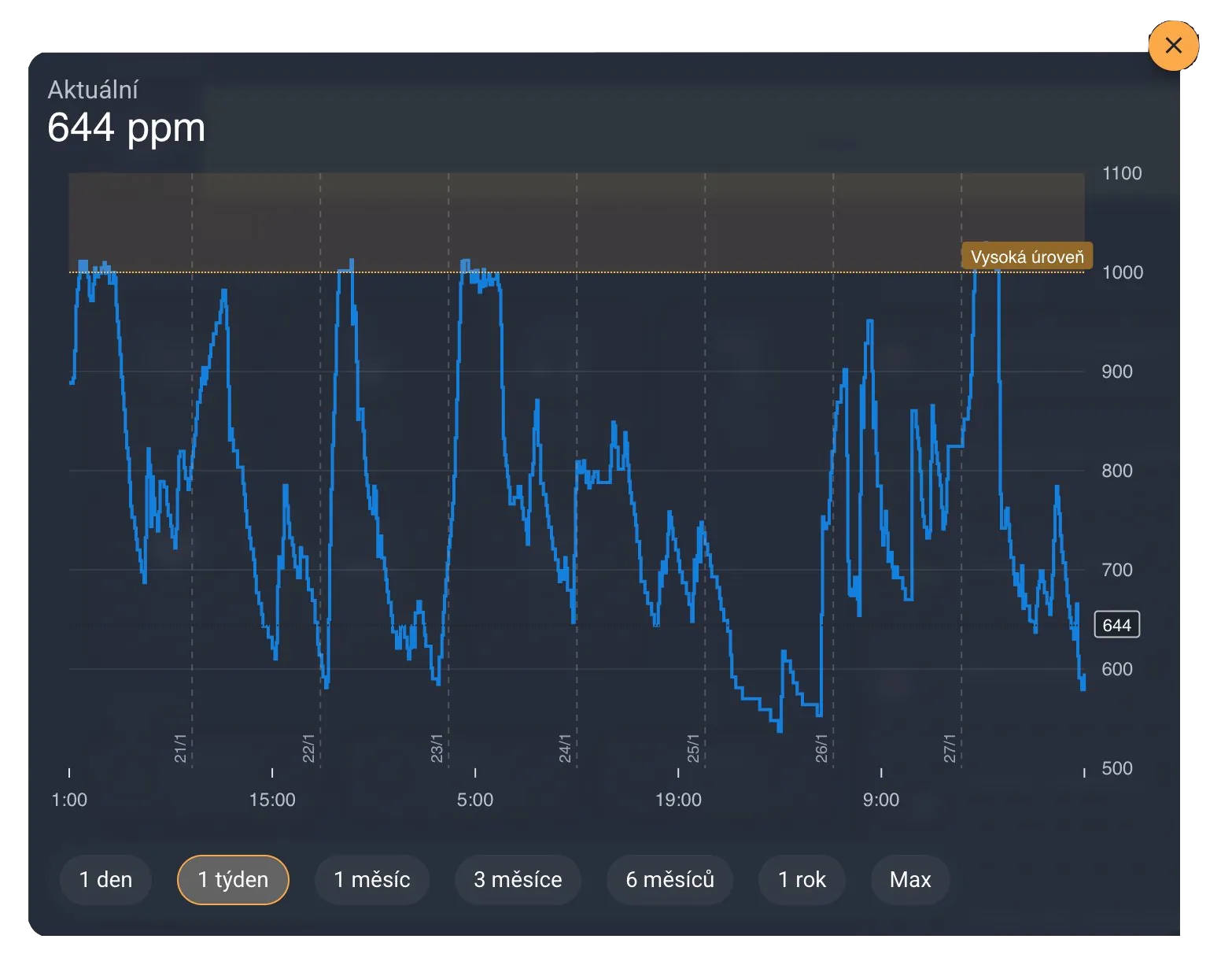
Above 1,000 ppm: practically never, only briefly at the limit ✓
This configuration uses a basic, affordable heat recovery system without built-in sensors. However, it’s enhanced by the BARAQ smart home system with an active smart ventilation rule that keeps bedroom CO₂ at or below roughly 1,000 ppm.
- Peak values: At most around 1,000 ppm
- Critical level: 1,500 ppm (not exceeded during the measured period)
- Typical range: 600–850 ppm throughout the day
This approach delivers the best results despite using the most economical heat recovery hardware. The key differentiator is room-specific control logic implemented through the smart home system.
Comparison table
| System Type | Avg CO₂ | Time above 1,000 ppm | Peaks |
|---|---|---|---|
| No heat recovery | ~1,000 ppm | ~45% | >2,000 ppm |
| Smart heat recovery (whole house) | ~770 ppm | ~15% | ~1,600 ppm |
| Basic heat recovery + smart control | ~760 ppm | only at the limit | ~1,000 ppm |
Key finding
The data reveals a counterintuitive conclusion: expensive equipment doesn’t guarantee optimal results. The weekly CO₂ average is almost the same in both houses with heat recovery (~770 and ~760 ppm). The difference shows at night: control by the sensor right in the bedroom kept CO₂ no higher than about the 1,000 ppm limit, while with the more expensive unit controlled by the whole-house average the concentration was above that limit about 15% of the time and rose as high as 1,600 ppm. So what matters is what the ventilation follows.
Health impacts
Studies suggest that stale air in the bedroom, for which CO₂ is a good indicator, can worsen sleep quality and how people feel in the morning. At concentrations that stay higher for long periods, roughly above 1,000 ppm, people more often report:
- morning headaches,
- poorer concentration,
- lower performance.
Keeping bedroom CO₂ below this threshold is one of the preconditions for good sleep.
About the data
The charts and the figures quoted come from the same week, 20–27 January, each chart from a different house. All measurements presented in this article were collected using ioSWIPE+ smart wall touch switch units equipped with integrated CO₂ sensors. Sensors were installed at 120 cm height from the floor in bedrooms for two adults.
In the third scenario, the BARAQ smart home system controlled the ventilation. The measurements show that even with basic heat recovery, bedroom CO₂ can be kept at around 1,000 ppm at most when ventilation follows a sensor in the bedroom itself.